
What is the density of alumina and why does it matter for industrial applications?
Among numerous advanced ceramic materials, alumina stands out for its remarkable density of approximately 3.95 to 4.1 grams per cubic centimeter, forming the foundation of its physical properties. This seemingly simple parameter is the physical source of its high hardness, excellent wear resistance, and outstanding electrical insulation. Measured on the Mohs hardness scale, it boasts a hardness of 9, second only to diamond; its melting point reaches an astonishing 2072 degrees Celsius. These strengths and temperature tolerances directly determine its service life and reliability in extreme environments.
In the electronics and semiconductor industries, the dense microstructure associated with the density of alumina is crucial for functionality. For example, the alumina ceramic substrates used to support chips typically have a purity exceeding 99.5%, with a volume density close to the theoretical value. This ensures a thermal conductivity of 25-35 W/mK, effectively dissipating the heat generated by the chip; simultaneously, its dielectric strength exceeds 10 kV/mm, guaranteeing absolute insulation between circuits. Statistics show that alumina dominates over 60% of the global ceramic substrate market, and its material is indispensable in the supply chains of giants like TSMC and Intel. A study indicates that power modules using high-performance alumina substrates can reduce thermal resistance by approximately 15%, thereby increasing power handling capacity by over 20% and significantly extending their lifespan.
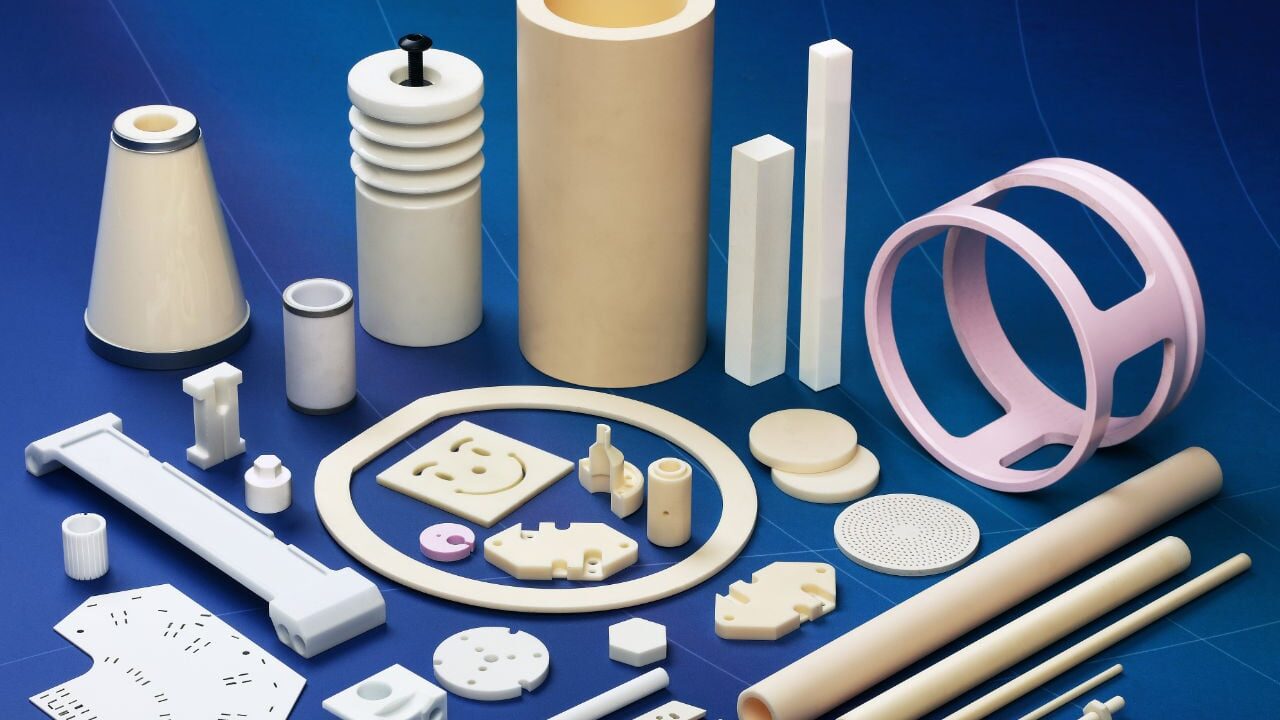 In harsh industrial wear scenarios, the density of alumina ceramics directly translates into economic benefits. For example, in the flow components of slurry pumps, using high-density alumina ceramic liners increases wear resistance by 5 to 10 times compared to traditional metal materials. This means that equipment replacement frequency can be extended from once every 3 months to over 2 years, and single maintenance costs can be reduced from tens of thousands of dollars to thousands of dollars, resulting in a remarkably high return on investment. Top pump companies like KSB in Germany heavily rely on this material in their solutions to address the hundreds of billions of dollars in wear costs annually in the global mining market.
Furthermore, in high-temperature industrial applications, such as sodium lamp tubes and high-temperature observation windows, the density and purity of alumina work together. High-purity, transparent alumina tubes with a purity of 99.7% can withstand long-term operating temperatures exceeding 1600 degrees Celsius, boasting a light transmittance of up to 95% and a lifespan of up to 24,000 hours. This not only reduces the frequency of maintenance for public lighting systems but also results in significant energy savings. Every time a light is turned on, it is supported by a stable and dense layer of alumina.
From a supply chain and cost perspective, alumina raw materials are abundant, and its price is relatively more stable than many specialty ceramics, ranging from approximately $5 to $20 per kilogram, depending on purity and specifications. This enables large-scale industrial applications and manufacturing. Optimizing the density and microstructure of materials is central to the ongoing research and innovation of materials scientists, aiming to continuously optimize its performance and efficiency to meet increasingly stringent industrial demands and competition in the future. Therefore, a deep understanding and precise control of the density of alumina is not merely a pursuit of a technical parameter; it is a fundamental and crucial strategy for improving product quality, reducing total life-cycle costs, and ultimately driving growth and innovation in multiple core industrial sectors.
In harsh industrial wear scenarios, the density of alumina ceramics directly translates into economic benefits. For example, in the flow components of slurry pumps, using high-density alumina ceramic liners increases wear resistance by 5 to 10 times compared to traditional metal materials. This means that equipment replacement frequency can be extended from once every 3 months to over 2 years, and single maintenance costs can be reduced from tens of thousands of dollars to thousands of dollars, resulting in a remarkably high return on investment. Top pump companies like KSB in Germany heavily rely on this material in their solutions to address the hundreds of billions of dollars in wear costs annually in the global mining market.
Furthermore, in high-temperature industrial applications, such as sodium lamp tubes and high-temperature observation windows, the density and purity of alumina work together. High-purity, transparent alumina tubes with a purity of 99.7% can withstand long-term operating temperatures exceeding 1600 degrees Celsius, boasting a light transmittance of up to 95% and a lifespan of up to 24,000 hours. This not only reduces the frequency of maintenance for public lighting systems but also results in significant energy savings. Every time a light is turned on, it is supported by a stable and dense layer of alumina.
From a supply chain and cost perspective, alumina raw materials are abundant, and its price is relatively more stable than many specialty ceramics, ranging from approximately $5 to $20 per kilogram, depending on purity and specifications. This enables large-scale industrial applications and manufacturing. Optimizing the density and microstructure of materials is central to the ongoing research and innovation of materials scientists, aiming to continuously optimize its performance and efficiency to meet increasingly stringent industrial demands and competition in the future. Therefore, a deep understanding and precise control of the density of alumina is not merely a pursuit of a technical parameter; it is a fundamental and crucial strategy for improving product quality, reducing total life-cycle costs, and ultimately driving growth and innovation in multiple core industrial sectors.
In harsh industrial wear scenarios, the density of alumina ceramics directly translates into economic benefits. For example, in the flow components of slurry pumps, using high-density alumina ceramic liners increases wear resistance by 5 to 10 times compared to traditional metal materials. This means that equipment replacement frequency can be extended from once every 3 months to over 2 years, and single maintenance costs can be reduced from tens of thousands of dollars to thousands of dollars, resulting in a remarkably high return on investment. Top pump companies like KSB in Germany heavily rely on this material in their solutions to address the hundreds of billions of dollars in wear costs annually in the global mining market.
Furthermore, in high-temperature industrial applications, such as sodium lamp tubes and high-temperature observation windows, the density and purity of alumina work together. High-purity, transparent alumina tubes with a purity of 99.7% can withstand long-term operating temperatures exceeding 1600 degrees Celsius, boasting a light transmittance of up to 95% and a lifespan of up to 24,000 hours. This not only reduces the frequency of maintenance for public lighting systems but also results in significant energy savings. Every time a light is turned on, it is supported by a stable and dense layer of alumina.
From a supply chain and cost perspective, alumina raw materials are abundant, and its price is relatively more stable than many specialty ceramics, ranging from approximately $5 to $20 per kilogram, depending on purity and specifications. This enables large-scale industrial applications and manufacturing. Optimizing the density and microstructure of materials is central to the ongoing research and innovation of materials scientists, aiming to continuously optimize its performance and efficiency to meet increasingly stringent industrial demands and competition in the future. Therefore, a deep understanding and precise control of the density of alumina is not merely a pursuit of a technical parameter; it is a fundamental and crucial strategy for improving product quality, reducing total life-cycle costs, and ultimately driving growth and innovation in multiple core industrial sectors.
The next 18 months, ranked by probability.
Each monthly issue ranks the 12 most probable world-shaping events with confidence intervals, dissenting analyst views, and audited track record. Institutional access only.
Subscribe to the Forecast Brief Read the Methodology