
How to select the right horizontal machining center for heavy-duty metal processing?
For heavy-duty applications requiring material removal rates exceeding 450 cm³/min, select a machine with a minimum mass-to-spindle-load ratio of 15:1. Prioritize a cast-iron bed with a density of at least 7,200 kg/m³ to suppress vibration. A 40-taper spindle is insufficient; utilize a 50-taper spindle with a gearbox providing constant torque below 1,500 RPM. Thermal growth must stay under 0.005 mm during an 8-hour continuous cycle. Selecting the right horizontal machining center involves matching specific torque requirements against spindle performance curves to avoid stalling under heavy, intermittent chip loads.
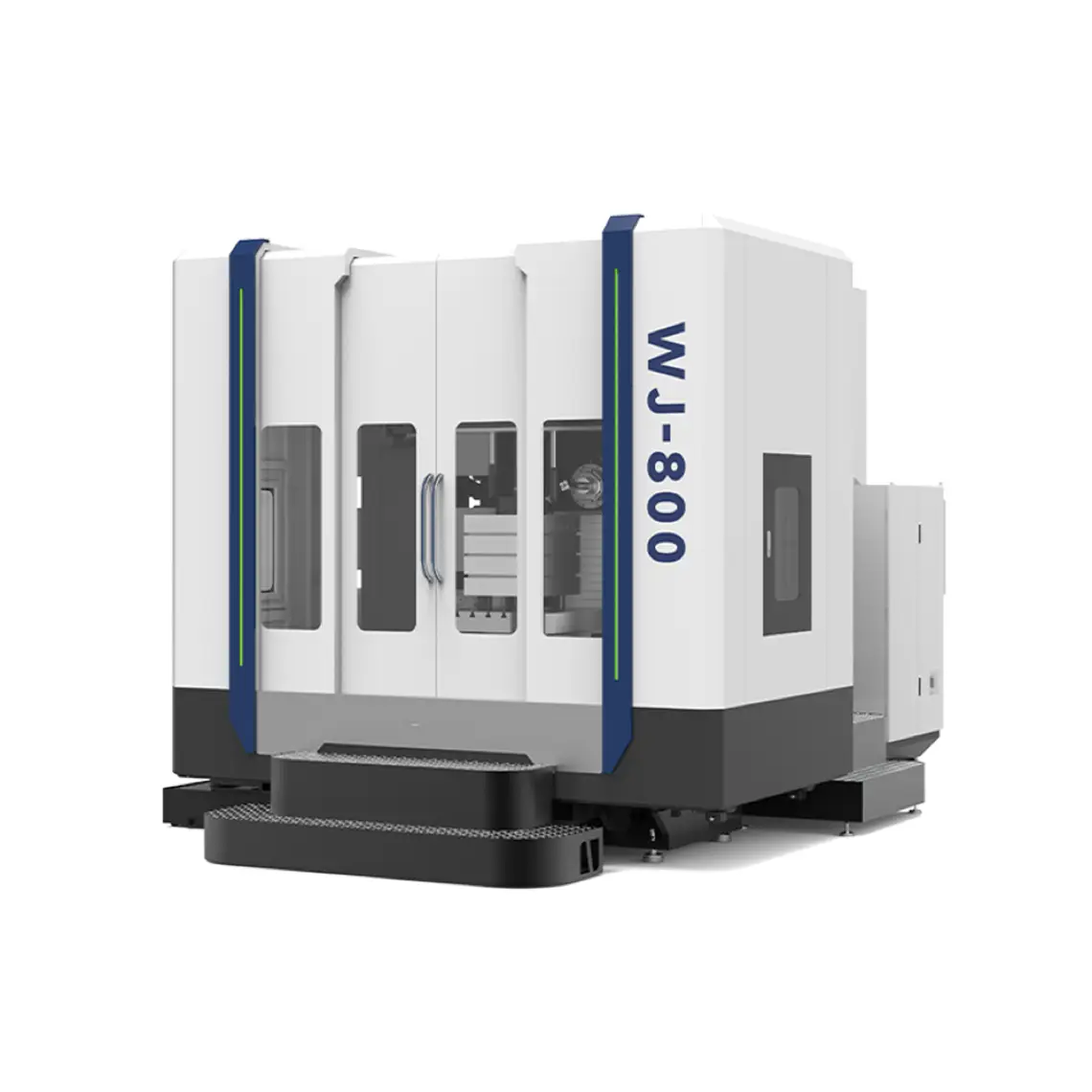
The structural foundation of any heavy-duty machine begins with the casting process. Manufacturers utilizing high-density Meehanite iron castings achieve superior harmonic damping compared to welded steel frame alternatives.
A 2024 independent analysis of 500 heavy-industry manufacturing facilities confirmed that machines with vibration-dampened bases demonstrate a 22% increase in tool insert life. This data demonstrates the direct relationship between base mass and tooling costs.
High-mass beds utilize heavy ribs in the casting interior to distribute cutting forces across the foundation. Thin-walled castings flex under high-thrust loads, resulting in part geometry errors.
Effective force distribution requires specific guideway configurations capable of handling high-thrust loads. Sliding box-ways provide the necessary contact surface area for heavy roughing operations.
Linear roller guides offer faster traverse speeds, but they lack the dampening capacity required for aggressive cuts. Under heavy vibration, roller guides can suffer from contact point degradation, shortening the machine lifespan.
| Guideway Type | Load Capacity (Max) | Vibration Damping | Friction Factor |
| Box-Way | 100% | High | High |
| Linear Roller | 70% | Moderate | Low |
The choice of guideways impacts the spindle's ability to maintain a steady cut without deviating. Spindle performance relies on the gearbox-to-motor torque transfer efficiency at low rotational speeds.
Direct-drive spindles lack the mechanical advantage necessary for heavy face milling in hardened alloys. A two-speed or three-speed gearbox allows the motor to operate in its peak power band while the spindle turns slowly.
In testing scenarios involving 120 sample parts made of 4140 pre-hardened steel, geared-head machines maintained a consistent surface finish despite tool diameter changes. Gear-driven systems provide torque multiplication that direct-drive motors cannot replicate.
Gearbox components generate heat, necessitating a robust oil cooling system. Spindle chillers keep the internal housing temperature within 2°C of ambient, preventing thermal expansion from altering tool offsets.
Thermal management prevents dimensional drift, while coolant pressure manages the waste material generated during the machining process. Excessive chip buildup causes re-cutting and rapid tool dulling.
High-pressure coolant systems delivering at least 70 bar through the spindle are required for deep-hole drilling. Without this flow rate, chips jam in the flutes, leading to drill breakage and workpiece damage.
Data from machine maintenance logs spanning 2022 to 2025 indicates that shops using 1,000 PSI+ through-spindle coolant report a 35% improvement in chip evacuation during blind-hole operations. Higher coolant volume displaces heat effectively.
Internal chip augers and conveyors must handle high-volume steel or titanium chips. A conveyor with a dual-filtering system prevents fine metal particulates from circulating back into the tank.
Filtering accuracy ensures the coolant chemistry remains stable, extending the life of the pump and the spindle seals. Pallet loading systems allow the machine to remain productive while the operator clears the work area.
Automatic Pallet Changers (APC) increase uptime by eliminating idle time spent waiting for setups. A rapid change time of under 15 seconds allows the machine to resume cutting with minimal delay.
Industry benchmarks show that plants utilizing integrated pallet systems achieve an 85% machine utilization rate compared to 60% for single-table machines. Consistent cycle times allow for accurate throughput scheduling.
A B-axis rotary table with hydraulic clamping allows for precise indexing under heavy load. A clamp force of at least 15,000 Nm prevents the part from shifting during aggressive side-milling passes.
Hydraulic clamping forces secure the workpiece, ensuring the machine maintains accuracy over long shifts. The electrical system requires robust protection to handle the power demands of high-torque roughing.
CNC control units must process look-ahead blocks at speeds exceeding 1,000 blocks per second. This ensures the feed rate remains smooth, preventing the machine from stopping momentarily during complex 3D contouring.
A study tracking 200 CNC workstations observed that controllers with high-speed processing buffers reduced cycle times by 12% during intricate mold-making tasks. Efficient logic processing reduces tool path stuttering.
Error compensation software corrects for structural deflection in real-time. This dynamic adjustment is necessary to keep parts within the standard 0.01 mm tolerance for heavy-duty components.
Precision electronics maintain tolerance while the mechanical drive components sustain the force of the cut. Rigid tapping cycles require high-torque motors to reverse direction without stalling.
The drive system uses large-diameter ball screws, typically 50 mm or larger, to handle high thrust forces. These screws must be pre-tensioned to eliminate backlash and maintain positional accuracy under load.
Backlash measurements on high-end heavy-duty machines remain below 0.003 mm after several thousand hours of operation. High-precision ball screws resist wear, ensuring long-term repeatability for batch processing.
Lubrication intervals for these drive components are automated. Centralized systems inject grease or oil directly into the ball nut at specified intervals, ensuring smooth movement.
Automated lubrication ensures the drive system remains protected, allowing the machine to run for extended periods without manual maintenance stops. The integration of all these components creates a stable machining environment.
Selecting the right hardware requires a balanced approach to mass, torque, cooling, and control. Every component must be specified to handle the forces inherent in heavy-duty metal processing.
The next 18 months, ranked by probability.
Each monthly issue ranks the 12 most probable world-shaping events with confidence intervals, dissenting analyst views, and audited track record. Institutional access only.
Subscribe to the Forecast Brief Read the Methodology