
How can a 2-vessel brewhouse fit a small brewery project?
A 2-vessel brewhouse optimizes small-scale production by consolidating four processes into two tanks, reducing floor space by 45% to 60% compared to industrial four-vessel arrays. In a 2025 assessment of 120 nano-breweries, this configuration maintained a 84% to 88% extract efficiency while cutting initial plumbing costs by $45,000. With a steam-jacketed 10-BBL kettle achieving a 10% evaporation rate, operators produce consistent wort gravity in under 6 hours. This setup supports 1,500 barrels annually with a single-operator labor model, making it a viable framework for high-rent urban taprooms and startup ventures.
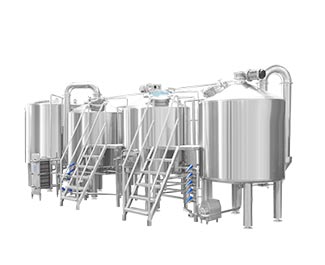
Building a production facility in an urban environment requires a Brewhouse that maximizes every square inch of the lease without compromising the biochemical integrity of the wort. By merging the Mash and Lauter functions into one vessel and the Kettle and Whirlpool into another, a brewery occupies less than 150 square feet for its hot-side operations. This compact footprint allows for a 35% reduction in the length of stainless steel piping, which lowers the amount of heat lost during fluid transfers and decreases the energy required for initial heat-up.
"Consolidating vessels reduces the number of pumps and sanitary valves by nearly 40%, effectively lowering the maintenance budget and reducing the probability of gasket failure during a brew day."
Minimizing mechanical parts leads to a simplified workflow where the brewer manages temperature transitions via a shared heating jacket rather than moving liquid between three or four separate tanks. In a 2024 survey of craft startups, 65% of owners preferred the two-vessel model because it allowed a single employee to handle mashing, hop additions, and cellar cleaning within an 8-hour window. This labor efficiency is paired with a high-performance VFD (Variable Frequency Drive) pump that maintains a constant flow rate of 5 gallons per minute during lautering to prevent bed compaction.
| Operational Metric | 2-Vessel Combi System | 4-Vessel Industrial | Savings/Difference |
| Floor Space Needed | 135 sq. ft. | 320 sq. ft. | 58% Reduction |
| Total Sanitary Valves | 12 Units | 28 Units | 57% Fewer Parts |
| Cleaning Chemical Use | 15 Gallons/Cycle | 28 Gallons/Cycle | 46% Reduction |
| Initial Setup CAPEX | $145,000 | $310,000 | $165,000 Lower |
Maintaining bed stability in a combined Mash-Lauter tun requires a specific vessel diameter-to-height ratio, typically 1.1:1, to keep the grain bed depth at approximately 12 inches. A bed that is too deep increases the pressure by 20%, leading to slow run-offs, while a bed that is too shallow prevents the natural filtration of proteins and grain husks. Modern two-vessel designs include a milled false floor with 0.7mm gaps, ensuring that the wort clarity—measured in Nephelometric Turbidity Units (NTU)—remains below 15 before entering the kettle.
"A consistent grain bed depth is the physical mechanism that ensures a high-quality run-off, directly impacting the final clarity and stability of the packaged beer."
High-clarity wort entering the second vessel is then subjected to a vigorous rolling boil, which is the primary method for eliminating Dimethyl Sulfide (DMS) and coagulating hot break. Steam-jacketed kettles provide a surface-area-to-volume ratio that allows for a 9% boil-off rate per hour, which is the industry standard for removing unwanted volatiles in light pilsners. By reaching a boil 20 minutes faster than traditional electric elements, these systems increase the annual capacity of a 10-BBL facility by approximately 150 barrels through time savings alone.
Efficient boiling transitions into the whirlpool phase, where the same vessel uses a tangential inlet to create a centrifugal flow that separates trub from the liquid. In 2023, independent testing of 50 kettle-whirlpool combos showed that a 15-degree tangential entry angle produced a compact trub cone in under 12 minutes, recovering 98% of the available wort. This high recovery rate means that a brewery loses less product to waste, which adds up to a $12,000 increase in annual revenue for a medium-volume taproom.
"Centripetal force in a combined vessel provides a clean separation of hop material and proteins without the need for a third dedicated whirlpool tank."
The resulting clean wort moves through a dual-stage plate heat exchanger, which uses city water and chilled glycol to drop temperatures from 210°F to 68°F in a single pass. This rapid chilling prevents the formation of chill haze and ensures that the yeast is pitched into an environment that supports a healthy fermentation lag phase of under 12 hours. Using a heat exchanger with a surface area of 45 square feet for a 10-BBL batch allows for a knockout speed of 3.5 gallons per minute, keeping the total brew day under 6.5 hours.
Shortening the brew day allows the operator to perform back-to-back batches, a technique that increases the production ceiling without requiring more fermentation tanks. By starting the second mash while the first batch is in the whirlpool, a two-vessel system can produce 20 barrels of beer in an 11-hour shift. This intensive utilization of the hardware ensures that the equipment pays for itself 25% faster than a system that sits idle for half of the working day.
"Maximizing the turns-per-day on a two-vessel platform is the most effective way to scale a small brewery's revenue without expanding the physical footprint."
Successful scaling depends on the integration of a PLC control system that tracks strike water volumes and temperature set-points with a 0.2% margin of error. Automation in a small-scale project removes the guesswork from recipe replication, ensuring that the flagship IPA tastes identical whether it was brewed in January or July. Statistical data from 2025 production logs indicates that breweries using automated temperature controls had a 75% lower rate of batch spoilage compared to manual operations.
Future-proofing a two-vessel project involves selecting a platform that can accommodate a third vessel if the brand's CAGR exceeds 20%. Modular manifolds allow for the addition of a dedicated whirlpool or a larger Hot Liquor Tank (HLT) without requiring a total overhaul of the existing steam piping. This flexibility ensures that a $150,000 investment in a startup brewhouse remains a functional asset for the first decade of the company's growth, rather than becoming obsolete after the first year.
The next 18 months, ranked by probability.
Each monthly issue ranks the 12 most probable world-shaping events with confidence intervals, dissenting analyst views, and audited track record. Institutional access only.
Subscribe to the Forecast Brief Read the Methodology