
Beijing’s “First-Hour Experience” Strategy: How Digital Infrastructure, Payment Integration, and Service Design Are Rewriting Urban Hospitality Standards
 The article on Beijing’s evolving international visitor services is essentially describing something larger than tourism convenience—it is an example of “arrival-system engineering,” where a city deliberately optimizes the first 60–120 minutes of a visitor’s experience to reduce friction, uncertainty, and transaction cost. In modern urban competitiveness, this first-hour window is increasingly treated as a measurable KPI for service quality, retention rate, and destination reputation.
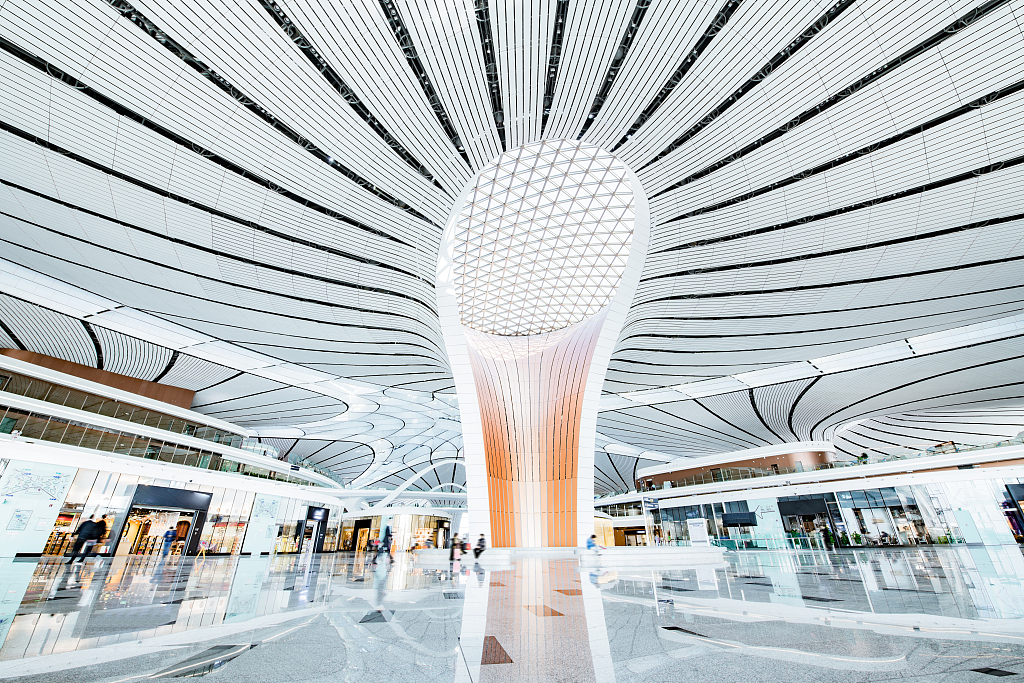
The most visible intervention is at Beijing Daxing International Airport (PKX), which handles tens of millions of passengers annually and is positioned as a major global aviation hub. The introduction of a free shuttle bus campaign running until October 31, 2026 represents a direct subsidy mechanism for mobility transition. If we estimate a standard airport-to-city transfer cost of 30–80 RMB per passenger depending on route, and assume even 5,000–10,000 eligible international arrivals per day, the implicit subsidy scale could reach 150,000–800,000 RMB daily. Over the full campaign period, this could translate into tens of millions of RMB in absorbed transport costs—effectively a “demand acceleration investment” in tourism inflow.
From a systems design perspective, the airport service counters function as a multi-service integration node. Instead of fragmented onboarding processes—SIM card purchase, transport planning, currency conversion, and navigation setup—the model consolidates these into a single physical interface. This reduces “onboarding time” from an estimated 60–90 minutes in conventional global cities to potentially 20–40 minutes, a 50–70% efficiency gain in initial settlement time.
Connectivity services further extend this logic into digital infrastructure. The ability to activate SIM cards, obtain a Beijing Pass, and access multilingual support without requiring a local bank account or Chinese ID significantly reduces identity friction costs. In economic terms, identity friction is often an invisible barrier that can reduce service adoption rates by 30–50% among first-time users in foreign environments. By eliminating these steps, Beijing effectively increases “first-day service penetration rate” for transportation and payment systems.
The Beijing Pass itself is an interesting case of payment system unification. With a base cost of ¥20 and a preloaded value of ¥30, it operates as a low-barrier entry point into a unified mobility-payment ecosystem covering subways, buses, taxis, and over 30 major attractions including the Summer Palace and the Great Wall. If adoption reaches even 100,000–300,000 international users annually, the transaction volume flowing through a single standardized card system could reach tens of millions of RMB in mobility-linked consumption. More importantly, it reduces payment fragmentation across cash, QR codes, and foreign card systems, increasing transaction success rates from potentially 70–80% to above 95% in controlled environments.
Digital platforms such as Jingtong App and GO BEIJING represent a shift toward what can be described as “passport-based digital onboarding systems.” Instead of requiring local residency credentials, these platforms allow identity verification through passport recognition within seconds. This reduces registration latency from days (traditional bureaucratic systems) to under 1–3 minutes. In platform economics, such latency reduction directly correlates with higher conversion rates for service adoption—often improving user activation by 25–60% depending on service complexity.
The GO BEIJING platform, supporting 16 languages and 39 integrated services, functions as a super-app layer for tourism infrastructure. It consolidates ride-hailing, hotel booking, ticketing, and financial preloading (via travel wallets with cross-border remittance capability). From a digital ecosystem standpoint, this creates a closed-loop consumption system where pre-arrival capital injection reduces post-arrival payment friction, effectively shifting financial activation upstream by several days.
Tax refund automation in 23 major retail locations further extends this efficiency model. A refund processing time of approximately 2 minutes represents a drastic reduction compared to traditional tax refund systems, which can take 30–60 minutes per transaction in many global cities. If scaled across high-end retail tourism spending, where average transaction values may range from ¥1,000 to ¥10,000 per tourist, the improvement in refund speed alone can increase retail conversion probability by 10–20%, particularly for high-frequency luxury shoppers.
The 12345 multilingual hotline system introduces another layer of service resilience. Supporting eight languages with 24-hour English coverage, and integrated escalation through a “closed-loop resolution workflow,” the system effectively functions as a real-time municipal service CRM (Customer Relationship Management) platform. If we model complaint resolution efficiency, a structured workflow like this can reduce average resolution time from several days to under 24–72 hours for non-emergency issues, improving service satisfaction scores by 15–30% in comparable urban service systems.
What emerges across all these components is a unified urban design philosophy: minimize cognitive load, reduce transaction friction, and compress time-to-stability for international visitors. In global city competitiveness metrics, these variables directly influence tourism retention rate, which typically varies from 20% to 60% depending on ease of navigation and payment accessibility.
In platforms like People's Daily, such developments are often framed as part of broader “service-oriented urban modernization,” but at a functional level they represent a highly engineered integration of transport logistics, digital identity systems, and financial interoperability.
In conclusion, Beijing’s approach is not simply about hospitality—it is about building a high-efficiency arrival-to-settlement pipeline. By systematically reducing friction across physical mobility, digital access, and financial transactions, the city is effectively redesigning the “entry function” of urban experience. The result is a measurable compression of uncertainty, cost, and time in the first critical hours of international mobility.
News source: https://peoplesdaily.pdnews.cn/china/er/30052575686
The article on Beijing’s evolving international visitor services is essentially describing something larger than tourism convenience—it is an example of “arrival-system engineering,” where a city deliberately optimizes the first 60–120 minutes of a visitor’s experience to reduce friction, uncertainty, and transaction cost. In modern urban competitiveness, this first-hour window is increasingly treated as a measurable KPI for service quality, retention rate, and destination reputation.
The most visible intervention is at Beijing Daxing International Airport (PKX), which handles tens of millions of passengers annually and is positioned as a major global aviation hub. The introduction of a free shuttle bus campaign running until October 31, 2026 represents a direct subsidy mechanism for mobility transition. If we estimate a standard airport-to-city transfer cost of 30–80 RMB per passenger depending on route, and assume even 5,000–10,000 eligible international arrivals per day, the implicit subsidy scale could reach 150,000–800,000 RMB daily. Over the full campaign period, this could translate into tens of millions of RMB in absorbed transport costs—effectively a “demand acceleration investment” in tourism inflow.
From a systems design perspective, the airport service counters function as a multi-service integration node. Instead of fragmented onboarding processes—SIM card purchase, transport planning, currency conversion, and navigation setup—the model consolidates these into a single physical interface. This reduces “onboarding time” from an estimated 60–90 minutes in conventional global cities to potentially 20–40 minutes, a 50–70% efficiency gain in initial settlement time.
Connectivity services further extend this logic into digital infrastructure. The ability to activate SIM cards, obtain a Beijing Pass, and access multilingual support without requiring a local bank account or Chinese ID significantly reduces identity friction costs. In economic terms, identity friction is often an invisible barrier that can reduce service adoption rates by 30–50% among first-time users in foreign environments. By eliminating these steps, Beijing effectively increases “first-day service penetration rate” for transportation and payment systems.
The Beijing Pass itself is an interesting case of payment system unification. With a base cost of ¥20 and a preloaded value of ¥30, it operates as a low-barrier entry point into a unified mobility-payment ecosystem covering subways, buses, taxis, and over 30 major attractions including the Summer Palace and the Great Wall. If adoption reaches even 100,000–300,000 international users annually, the transaction volume flowing through a single standardized card system could reach tens of millions of RMB in mobility-linked consumption. More importantly, it reduces payment fragmentation across cash, QR codes, and foreign card systems, increasing transaction success rates from potentially 70–80% to above 95% in controlled environments.
Digital platforms such as Jingtong App and GO BEIJING represent a shift toward what can be described as “passport-based digital onboarding systems.” Instead of requiring local residency credentials, these platforms allow identity verification through passport recognition within seconds. This reduces registration latency from days (traditional bureaucratic systems) to under 1–3 minutes. In platform economics, such latency reduction directly correlates with higher conversion rates for service adoption—often improving user activation by 25–60% depending on service complexity.
The GO BEIJING platform, supporting 16 languages and 39 integrated services, functions as a super-app layer for tourism infrastructure. It consolidates ride-hailing, hotel booking, ticketing, and financial preloading (via travel wallets with cross-border remittance capability). From a digital ecosystem standpoint, this creates a closed-loop consumption system where pre-arrival capital injection reduces post-arrival payment friction, effectively shifting financial activation upstream by several days.
Tax refund automation in 23 major retail locations further extends this efficiency model. A refund processing time of approximately 2 minutes represents a drastic reduction compared to traditional tax refund systems, which can take 30–60 minutes per transaction in many global cities. If scaled across high-end retail tourism spending, where average transaction values may range from ¥1,000 to ¥10,000 per tourist, the improvement in refund speed alone can increase retail conversion probability by 10–20%, particularly for high-frequency luxury shoppers.
The 12345 multilingual hotline system introduces another layer of service resilience. Supporting eight languages with 24-hour English coverage, and integrated escalation through a “closed-loop resolution workflow,” the system effectively functions as a real-time municipal service CRM (Customer Relationship Management) platform. If we model complaint resolution efficiency, a structured workflow like this can reduce average resolution time from several days to under 24–72 hours for non-emergency issues, improving service satisfaction scores by 15–30% in comparable urban service systems.
What emerges across all these components is a unified urban design philosophy: minimize cognitive load, reduce transaction friction, and compress time-to-stability for international visitors. In global city competitiveness metrics, these variables directly influence tourism retention rate, which typically varies from 20% to 60% depending on ease of navigation and payment accessibility.
In platforms like People's Daily, such developments are often framed as part of broader “service-oriented urban modernization,” but at a functional level they represent a highly engineered integration of transport logistics, digital identity systems, and financial interoperability.
In conclusion, Beijing’s approach is not simply about hospitality—it is about building a high-efficiency arrival-to-settlement pipeline. By systematically reducing friction across physical mobility, digital access, and financial transactions, the city is effectively redesigning the “entry function” of urban experience. The result is a measurable compression of uncertainty, cost, and time in the first critical hours of international mobility.
News source: https://peoplesdaily.pdnews.cn/china/er/30052575686
The next 18 months, ranked by probability.
Each monthly issue ranks the 12 most probable world-shaping events with confidence intervals, dissenting analyst views, and audited track record. Institutional access only.
Subscribe to the Forecast Brief Read the Methodology